// the shift Vibe coding is not just a developer trend
Every few years, the tech world gives us a phrase that sounds like it was invented during a group chat nobody should have been in. “Vibe coding” is one of those phrases.
Unfortunately, the silly name is attached to a real shift.
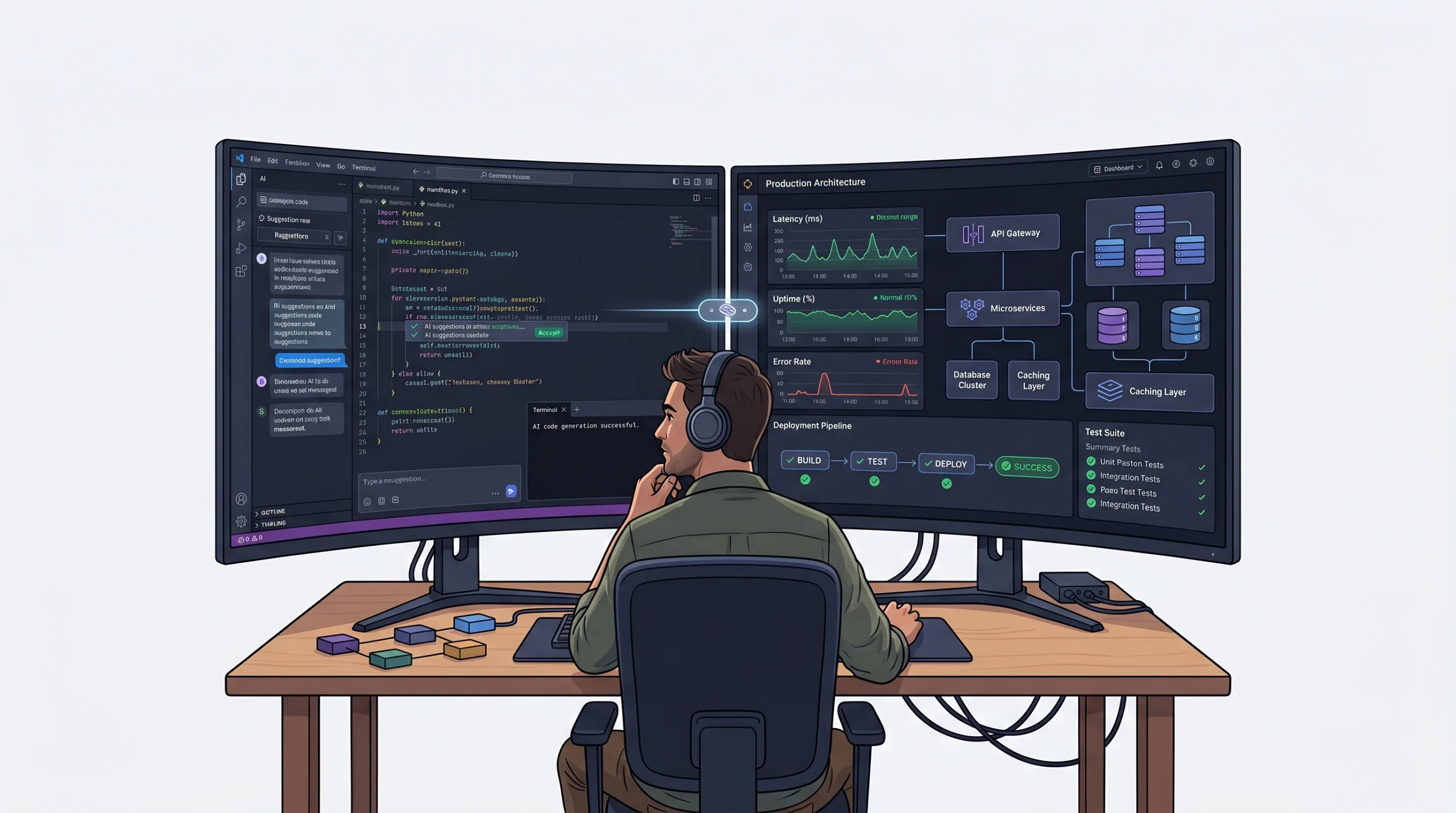
Vibe coding generally means using AI tools to turn natural language prompts into working code, screens, flows, or prototypes. Collins Dictionary named it the 2025 Word of the Year, and Google Cloud describes the broader pattern as a conversational build-and-refine loop, where people guide AI instead of writing every line by hand.
That does not mean AI magically understands your business, your customers, your margins, your CRM setup, your security requirements, your brand voice, your compliance needs, or the weird spreadsheet from 2017 that still runs half the company.
It means something more modest, and more useful: a rough version of an idea can arrive early enough to be argued with.
For business leaders, that is the part worth watching.
A rough version can arrive early enough to be argued with .
editorial thesis – rtw 2026
// evidence The gap between idea and evidence is getting smaller
For a long time, the path from “we need a better way to do this” to “here is something we can actually click” was slow.
There was the idea, the meeting, the second meeting because everyone imagined a different version, the rough spec, the design notes, the budget conversation, and the classic “can we just make it simple?” moment.
Planning still matters. Requirements matter. Good UX matters. The problem is that teams often make decisions while the idea is still abstract.
And abstract ideas are very polite. They rarely admit they are confusing.
A rough prototype is less polite. It can show that the customer flow has too many steps, the dashboard is tracking the wrong thing, the approval process has a missing owner, or the “simple” portal depends on three systems that do not currently talk to each other.
That is where vibe coding becomes interesting for SMBs. Not because it replaces the real work, but because it can move the conversation from imaginary to visible earlier.
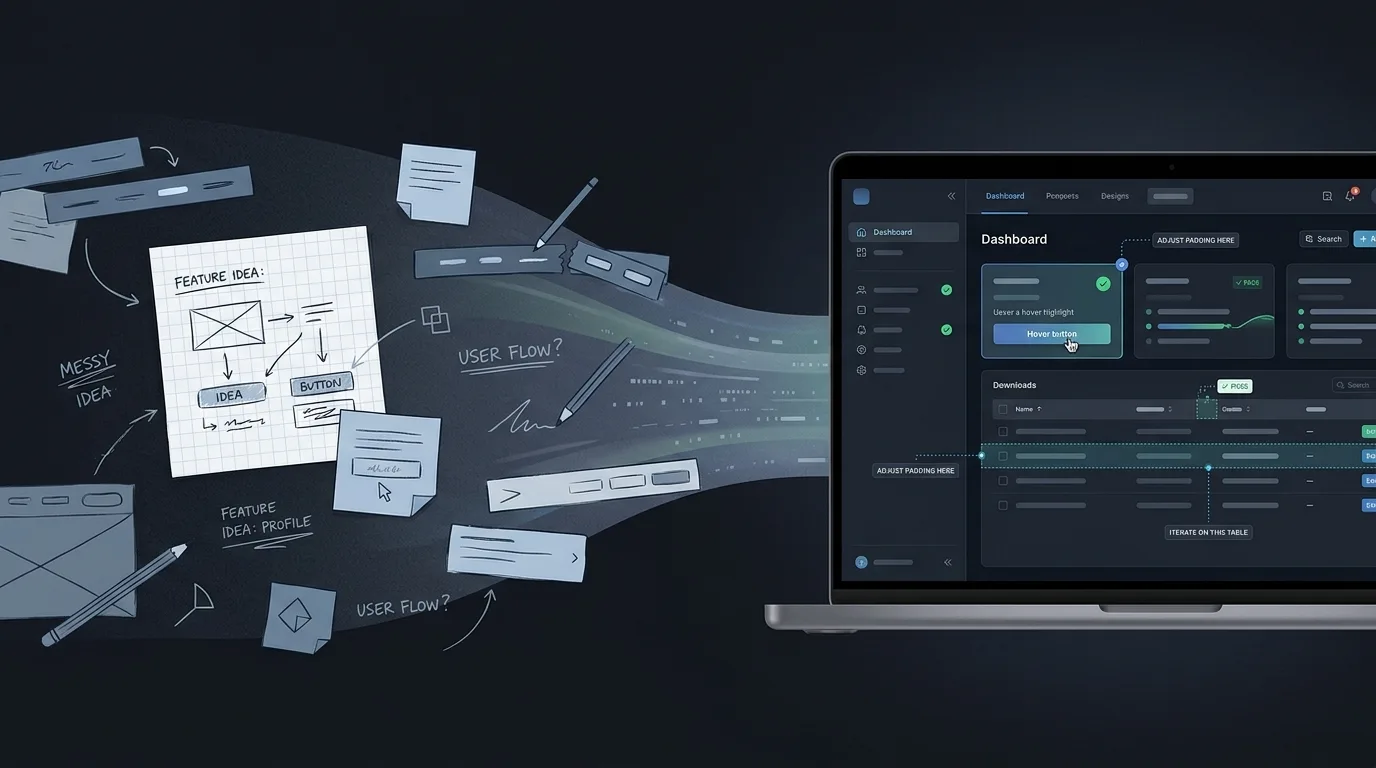
Visible beats imaginary.
// mixed data The research is messy, which is exactly the point
The AI coding conversation gets strange because both sides can find a study that sounds like it proves them right.
In a controlled experiment published by Microsoft Research, developers using GitHub Copilot completed a contained JavaScript task 55.8% faster than the control group. That is not nothing. If the work is bounded and the goal is clear, AI assistance can be a serious accelerator.
Then there is the less convenient evidence. In 2025, METR ran a randomized controlled trial with experienced open-source developers working in their own mature repositories. When AI tools were allowed, the developers took 19% longer than when they worked without them.
Both results can be true.
A clean coding task is not the same animal as a living business system with old decisions, hidden rules, edge cases, dependencies, naming conventions, and one function nobody wants to touch because the last person who understood it now runs a vineyard in Portugal.
For SMB leaders, the lesson is not “AI is fast” or “AI is overhyped.” The lesson is that AI speed is context-sensitive. It is strongest when helping people explore, sketch, draft, and compare. It becomes less magical when the work is tangled up with real data, real users, permissions, integrations, and support expectations.
// scoping A prototype can expose the real project
Picture a regional home-services company that wants a quoting tool. Nothing exotic. The owner wants sales reps to send estimates faster and stop rebuilding the same quote from scratch.
A vibe-coded prototype could appear quickly: a form for service type, location, photos, urgency, and a rough price range. Maybe it even has a neat little dashboard. For five minutes, the future has arrived wearing a hoodie.
Then the real conversation starts.
Operations points out that some service areas require different crews. Finance says discounts depend on account history. Sales wants quote revisions tracked. Someone remembers that uploaded photos may contain personal information. The owner asks whether this connects to the CRM or just creates another place for information to go die quietly.
Now we are getting somewhere.
The prototype did not solve the business problem. It revealed the shape of it.
Workflow owners
Data rules
Integrations
Failure paths
Support needs
The real build
That is the better use of vibe coding. The AI may get you to a clickable draft faster. The business still has to discover the rules, responsibilities, exceptions, data, integrations, and failure modes.
At Reston Tech Wiz, that is often where scoping gets more honest. The first screen is rarely the expensive part. The expensive part is usually what sits behind it: permissions, data ownership, reporting, integrations, maintenance, and what happens when something breaks on a Tuesday morning while everyone is already busy.
// reality check The demo is not the system
Here is the line worth taping to the wall:
A demo proves that something can be imagined. It does not prove that it is ready to run your business .
production rule – rtw 2026
AI-assisted tools can generate layouts, components, sample data, workflow logic, and surprisingly convincing screens. Demos feel powerful because they collapse the distance between “what if” and “look at this.”
They can also collapse the distance between “interesting” and “dangerous” if nobody is checking the output.
The trust gap is not theoretical. In the 2025 Stack Overflow Developer Survey, more developers said they distrust the accuracy of AI tool output than trust it. The 2025 DORA report makes a related point from another angle: AI tends to amplify an organization’s existing strengths and weaknesses. It does not sprinkle process maturity on top like parmesan.
For any system that touches customer data, payments, permissions, authentication, business-critical workflows, or third-party integrations, the boring questions still matter. Who can access what? Where does data live? What happens when someone enters bad information? What needs to be logged, monitored, tested, and documented?
I know. That paragraph is less exciting than “I built an app in an afternoon.” It is also the difference between a neat demo and a system your staff can trust.
// guardrails When AI is allowed to be messy, and when it is not
The demo is allowed to be messy. Production is not.
That does not mean vibe coding has no place in serious projects. It means its role changes as the stakes rise.
Use it to explore rough workflows, compare interface ideas, help nontechnical stakeholders react to something visible, and find the parts of the project nobody has explained clearly yet.
But once a feature starts touching money, personal data, authentication, permissions, operational decisions, or external systems, the process needs to slow down in the right way. Not bureaucratic slow. Professional slow.
prototype to production – review path
where the demo becomes accountable- Architecture review. What systems, data, permissions, and dependencies sit behind the screen?
- UX review. Can real users complete the workflow without guessing, looping, or misunderstanding the next step?
- Code review. Is the generated code maintainable, secure, tested, and consistent with the real application?
- Security review. Where are authentication, permissions, private data, secrets, and third-party actions handled?
- Accessibility basics. Can people use the interface with keyboard navigation, screen readers, and realistic devices?
- Testing and deployment. What breaks, how do we know, how do we roll back, and who owns support after launch?
AI-specific security belongs in that conversation too. OWASP’s work on large language model application risks highlights issues such as prompt injection, sensitive information disclosure, unsafe output handling, and excessive agency when AI systems can interact with other tools or take actions.
Please do not build your payment system on optimism and a prompt history.
// decision Pay attention, but do not panic
The question is no longer only, “Can we build this?”
For many SMB digital ideas, the first version can now appear faster than before. That is helpful, but it is not the finish line. It is the beginning of a better conversation.
Vibe coding is not the end of developers, agencies, UX work, or disciplined software delivery. It is a sign that the early stage of digital work is becoming faster, more conversational, and less dependent on everyone perfectly imagining the same thing from a document.
For SMBs, that can be good news. You can test ideas earlier, create better briefs, spot unclear requirements sooner, and help your team react to something concrete instead of politely nodding at a paragraph nobody fully understands.
It does not mean every rough AI-generated prototype deserves to become production software.
If you have an idea, a messy workflow, or a prototype that looks promising but suspiciously easy, bring it into the conversation. Reston Tech Wiz can help separate what is useful for exploration from what needs proper architecture, UX, security, testing, and support before it belongs anywhere near your customers.
That is the real shift: not code replacing judgment, but faster drafts creating better judgment sooner.
| Source | Used for |
|---|---|
| Collins Dictionary | 2025 Word of the Year context for "vibe coding". |
| Google Cloud | Definition of conversational AI-assisted build-and-refine workflow. |
| Microsoft Research | GitHub Copilot controlled-task productivity result. |
| METR | 2025 randomized trial with experienced developers in mature repositories. |
| Stack Overflow / DORA / OWASP | Trust, delivery maturity, and AI application risk framing. |
